How to Make $10K/Month With Your Facebook Page: A Realistic Blueprint That Actually Works
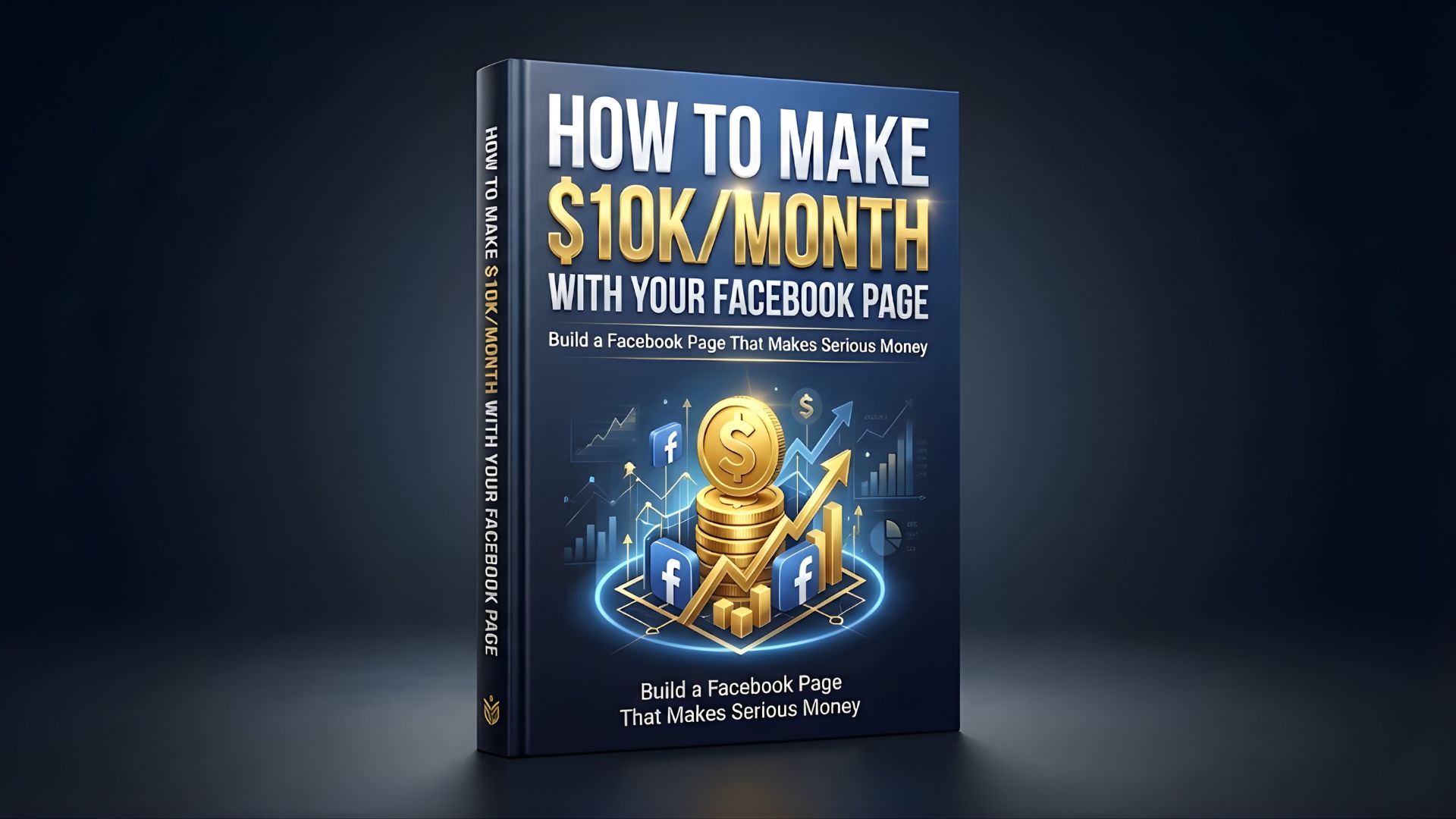
How to Make $10K/Month With Your Facebook Page : So you’ve heard that Facebook is dead, right? Everyone seems to say it. But here’s something interesting — while people were busy writing Facebook’s obituary, thousands of regular people (no cameras, no famous faces, no tech background) were quietly building pages that print money every single month.
I’m talking about $4,000… $7,000… even $10,000+ per month — from a single Facebook page.
Facebook’s Content Monetization Program paid out over $3 billion to creators in 2025 alone. Most people scrolling through their feeds have absolutely no idea this exists. And that’s exactly why the opportunity is still wide open for you.
If you’ve been wondering whether you can seriously make $10K per month with your Facebook page, the honest answer is yes — but only if you build it the right way. This guide is going to show you exactly how, step by step, in explain.
Ready? Let’s get into it.
Why Facebook Page Monetization Is Still a Goldmine in 2026
Here’s a question worth thinking about — if Facebook was truly dead, why would Meta be paying billions of dollars to content creators every year?
The truth is, Facebook’s so-called “uncool” image among younger audiences is actually what makes it so insanely profitable for smart creators. While everyone else fights for attention on TikTok and Instagram Reels, a massive pool of engaged, high-spending users on Facebook keeps growing quietly.
Facebook’s core audience — Gen X, millennials, and boomers — tends to:
- Spend longer time on the platform per session
- Have stronger purchasing power than younger demographics
- Respond deeply to emotional, nostalgic, and relatable content
- Click and share content at much higher rates
This directly affects your RPM (Revenue Per Mille) — the money you earn per 1,000 views. High-performing niches on Facebook regularly pay between $8 to $25+ per thousand views. Compare that to TikTok where RPMs often sit painfully low, and you start to see why Facebook creators are quietly winning.
Here’s a quick comparison that puts things in perspective:
| Platform | Average RPM Range | Audience Engagement | Content Shelf Life |
|---|---|---|---|
| $8 – $25+ | Very High | Long (evergreen) | |
| TikTok | $0.02 – $0.04 | Medium | Very Short |
| $1 – $4 | Medium | Short | |
| YouTube | $3 – $10 | High | Medium-Long |
One well-managed Facebook page generating 10–15 million monthly views can realistically bring in $4,000 to $8,000 per month from the Content Monetization Program alone. Add a second income stream like website traffic or affiliate links, and hitting $10K becomes very achievable.
Does that surprise you? Drop a comment below — I’d genuinely love to know if you’ve ever considered Facebook as a serious income platform before reading this.
How to Choose a Niche That Actually Pays Well on Facebook
Before you create a single post, your niche decision determines roughly 80% of your eventual income. This is not an exaggeration at all.
Two pages posting identical quality content — one in a high-RPM niche, one in a low-RPM niche — will earn dramatically different amounts every single month. Choosing the wrong niche is probably the most common reason beginner Facebook page owners give up too soon.
What Makes a Winning Facebook Niche?
A profitable niche needs three things working together at the same time:
- Wide audience — enough people interested to drive serious view counts
- High RPM — strong advertiser demand that pushes earnings per view up
- Evergreen appeal — content that stays relevant for months or years, not just days
Top 15 High-RPM Niches on Facebook Right Now
| Niche | Why It Works | RPM Potential |
|---|---|---|
| Gardening & Home | Evergreen, visual, huge reach | Very High |
| Health & Wellness | Always relevant, broad audience | Very High |
| Christian/Inspirational | Emotional, loyal, consistent | High |
| Animals & Pets | Viral-friendly, shareable | High |
| Finance & Money Tips | High advertiser demand | Very High |
| Food & Recipes | Massive US female audience | High |
| Motivational/Mindset | Easy to batch content | Medium-High |
| Parenting & Family | Emotional, relatable, shareable | High |
| Self-Improvement | Book summaries, life tips | Medium-High |
| Life Hacks | Easily goes viral | Medium-High |
| Fun Facts | Great with visuals/carousel | Medium |
| Travel | Dream content, aspirational | Medium-High |
| Education & Learning | Good RPM, easy to batch | Medium-High |
| Relationship Advice | Safe tips perform well | Medium |
| Success & Business | Entrepreneurship content | Medium-High |
Niches You Should Absolutely Avoid
Some niches look tempting but will quietly destroy your page’s future:
- Celebrity gossip — Copyright nightmares and content that expires within days
- Meme-only pages — Fun, but advertisers don’t want to be near low-quality humor
- NSFW or controversial content — Gets demonetized faster than you can blink
- Movie clips or music videos — One copyright strike can end everything
- Low-effort cringe content — Facebook flags this as “low quality” and throttles reach
Here’s something most guides won’t tell you though: you don’t need to love your niche passionately. Passion helps, sure — but neutral tolerance is perfectly fine. What matters most is that the topic doesn’t drain you completely, because you’ll be managing this page for years if you’re serious about the income.
Ask yourself this honestly — is there a topic from that list above that you could comfortably create content around for the next 12 months without wanting to quit?
Setting Up Your Facebook Page the Right Way From Day One
Now that you’ve picked your niche, let’s build the foundation properly. Most people rush through setup and pay for it later. Don’t be that person.
Step-by-Step Page Setup Checklist
- Step 1: Create the Page — Go to Facebook and create a new page (not a profile)
- Step 2: Choose a clear, keyword-friendly page name — Something like “Daily Life Tips” or “Healthy Living Hub” works well
- Step 3: Upload a bold, readable logo — Use Canva, keep it high contrast, circular format, readable at small sizes
- Step 4: Add a professional cover image — Niche-relevant, clean, visually appealing
- Step 5: Write a benefit-driven description — Short, clear, tells visitors exactly what they’ll get
- Step 6: Select the right category — Personal Blog, News & Media Website, or Motivational Speaker all work
- Step 7: Add a Call-to-Action button — “Follow” or link to your Facebook Group
- Step 8: Add a backup admin immediately — This is critically important and almost everyone skips it
That last point deserves its own spotlight. The moment your page is live, add a second trusted Facebook profile as an admin. If your main account ever gets restricted or disabled — which happens more than people expect — you’ll lose everything you’ve built unless a backup admin can step in. Make sure that backup profile has absolutely zero prior violations with Facebook.
Why You Should Start a Facebook Group Alongside Your Page
Here’s something that separates intermediate page operators from beginners — they build a Facebook Group at the same time as the page.
Facebook has been pushing group content aggressively. Trending posts you see organically spreading across the platform are very often coming from groups, not standalone pages. A group creates a community that:
- Feeds engagement back into your page
- Gives you a second distribution channel
- Compounds your reach over time
- Drives more followers to your main page
Set the group to Public (not Private) so non-members can see content and decide to join. A private group simply cannot go viral.
Content Strategy: What to Post, How to Post It, and When
This is where most Facebook page owners either win big or quietly fail. Posting randomly and hoping something sticks is not a strategy — it’s wishful thinking.
What Content Format Actually Works on Facebook?
The single most effective format — consistently across nearly every niche — is a vertical image (1080 x 1350 pixels) paired with an emotional, story-driven caption. This format takes up maximum screen space in the mobile feed, which dramatically increases the chance someone stops scrolling.
Here’s a breakdown of the top performing content types:
| Content Type | Why It Works | Best For |
|---|---|---|
| Image + Emotional Text | Stops scroll, triggers emotion | All niches |
| Text-Only Posts | Feels personal, loads instantly | Quotes, opinions |
| Nostalgic Content | Triggers memories, gets shares | Older audiences |
| Question Posts | Drives comments = more reach | Interactive niches |
| Trendy/Relatable | Timely, shareable, emotional | Lifestyle, parenting |
The five types of content that generate consistent, real engagement are:
- Relatable content — Makes people nod and say “that’s literally me”
- Funny content — Gets shared before people even finish reading
- Authentic content — Feels human, not manufactured
- Nostalgic content — Triggers emotional memories powerfully
- Interactive content — Questions and polls pull comments out of silent readers
More comments signal to Facebook’s algorithm that your post is sparking real conversation — which triggers broader organic distribution — which means more views — which means more money in your pocket at the end of the month.
Best Times to Post on Facebook for Maximum Reach
Timing genuinely matters, and here’s a detail most people miss completely: posting at half-past the hour consistently outperforms posting on the hour, simply because most other creators post exactly on the hour. Less competition for feed space means better initial reach.
Your three golden posting windows (EST — US time):
- 8:30 AM — Catches morning scrollers right when they wake up
- 11:30 AM — Strong on weekends when people browse before lunch
- 8:30 PM — People unwinding after work, relaxed and scrolling
In the early stages, aim for 6 to 8 posts per day, spaced about two hours apart. As your page grows past 20,000 followers, you can comfortably scale up to 14 posts daily. Schedule everything in advance using Meta Business Suite — Facebook’s completely free built-in scheduling tool. You absolutely do not need to be manually posting every morning at 8:30 AM.
The Reposting Strategy Nobody Talks About
When you find content that performs exceptionally well, don’t archive it and move on. Your best posts are worth reposting every 2 to 4 weeks with a slightly refreshed caption or updated hook.
Think about it this way — your page is constantly gaining new followers who never saw that post the first time. For them, it’s completely fresh content. For you, it’s free money with almost zero effort.
Just remember:
- Only repost your top 10% performers — not everything
- Wait at least 1 week minimum before reposting anything
- Change the caption hook slightly so it doesn’t feel like an exact copy
- Match the repost timing to when the original performed best
How to Grow Your Page Fast and Get Monetization Approved
Growing from zero followers to monetization eligibility requires a combination of organic tactics and paid acceleration. Let’s look at both honestly.
Organic Growth Tactics (Free but Slower)
- Invite your personal friends and family to follow the page early on
- Share content into relevant, active Facebook groups (not spam groups)
- Use Facebook’s built-in Invite Tool after every post that gets likes or comments
- Comment on viral posts in your niche using your page (not your personal profile)
- Cross-promote your page inside your Facebook Group regularly
These tactics work but they take time. If you want to reach monetization eligibility in weeks rather than months, you need the paid approach.
Running Page Like Ads: The Real Growth Accelerator
The fastest path from zero to monetization-ready is running a Page Likes Ad Campaign through Meta Ads Manager. Experienced operators use this to reach 10,000+ followers within weeks rather than grinding for months organically.
Here’s the exact budget scaling formula that works:
| Week | Daily Spend | Weekly Total |
|---|---|---|
| Week 1 | $10/day | $70 |
| Week 2 | $12/day (+20%) | $84 |
| Week 3 | $14.40/day (+20%) | $100.80 |
| Week 4 | $17.28/day (+20%) | $120.96 |
After Week 4, gradually reduce spend by 20% every 48 hours rather than cutting the budget suddenly. Facebook needs to see steady momentum, not abrupt stops.
Key targeting settings for your Page Like ads:
- Location: United States (or UK, Canada, Australia — Tier 1 countries only)
- Age: 25–65+ (Facebook’s audience skews older)
- Placement: Facebook Feed only (uncheck Instagram and Reels)
- Budget: Start at $5–$10 daily, increase by exactly 20% weekly
- Good Cost Per Like (CPL): Aim for $0.01–$0.05 per like
Why Tier 1 countries matter so much: having thousands of followers from lower-income countries actively hurts your monetization earnings because RPM is directly tied to where your audience is located. Quality over quantity always wins here.
What Facebook Actually Checks Before Approving Monetization
Understanding what Facebook evaluates during the review process helps you prepare properly rather than just hoping for the best.
Facebook looks at:
- Partner Monetization Policy compliance
- Content quality and originality
- Follower count and engagement rates (ideally 5,000–10,000+ followers)
- Audience geographic distribution (Tier 1 countries preferred)
- Page activity and posting consistency
- Zero copyright violations or spam history
Common reasons pages get rejected:
- Page has been inactive or inconsistent with posting
- Too many followers from non-Tier 1 countries
- Copyright violations or plagiarized content
- Spammy or low-effort posts
- Applying too early before the page is actually ready
One myth worth busting right now — you do not need a verified page to get monetized. Verification has nothing to do with the Content Monetization Program eligibility. Focus on consistency, content quality, and follower location instead.
Protecting Your Monetization and Scaling to $10K Monthly
Getting approved for monetization is a milestone worth celebrating — but it’s also the moment your real work begins. Losing monetization is like turning off a tap you worked months to open.
Things That Will Get Your Page Demonetized
Avoid these at all costs once you’re approved:
- Repetitive content — Posting the same type of image or video repeatedly gets flagged as low quality
- Plagiarized content — Copying from TikTok, YouTube, or other pages without transformation
- Spammy posts — Clickbait headlines, excessive emojis, links in every single caption
- Engagement bait — Forced “Tag 3 friends to win!” posts that Facebook actively penalizes
- Page inactivity — Going quiet for even a few weeks can trigger a monetization review
How to Scale Your Earnings to $10K Per Month
A single monetized page can realistically generate $3,000–$7,000 monthly once it crosses 100,000 engaged followers in a Tier 1 country. To consistently clear $10,000, you need multiple income streams or multiple pages — ideally both.
Vertical scaling strategies (growing your existing page):
- Reinvest 15% of monthly earnings back into Page Like and engagement ads
- Repost your best performing content consistently
- Share daily into relevant Facebook groups
- Cross-promote between your page and your Facebook group
Horizontal scaling strategies (expanding beyond one page):
- Launch a second page in a completely different niche
- Create multilingual “twin pages” — translate top content into Spanish for Latin America or Portuguese for Brazil
- Drive page traffic to a monetized blog or website (Google AdSense, Ezoic, or Mediavine)
- Add affiliate marketing links in your first comments on relevant posts
The most important thing about reaching $10K per month is this — it’s not one dramatic breakthrough. It’s the result of consistent execution across multiple pages and income streams built over time.
How to Make $10K/Month With Your Facebook Page FAQ
u003cstrongu003eQ : How long does it take to get approved for Facebook Content Monetization?u003c/strongu003e
u003cstrongu003eAns : u003c/strongu003eWith consistent posting and a well-run Page Like ad campaign, most pages get their monetization invite within 4 to 8 weeks. However, some pages take up to 3 months depending on niche competitiveness and content quality. Keep posting daily even after applying — stopping is the worst thing you can do while under review.
u003cstrongu003eQ : u003c/strongu003eDo I need to show my face on a Facebook page to make money?
u003cstrongu003eAns : u003c/strongu003eAbsolutely not. The entire strategy covered in this guide is built around faceless pages that earn thousands monthly using images, text posts, AI-generated content, and curated material. You never need to appear on camera.
u003cstrongu003eQ : u003c/strongu003eHow much money can one Facebook page realistically make per month?
u003cstrongu003eAns : u003c/strongu003eA well-run page with 100,000+ engaged Tier 1 country followers in a high-RPM niche can generate $3,000–$8,000 monthly from the Content Monetization Program alone. Adding website traffic or affiliate income can push a single page past $10,000 monthly.
u003cstrongu003eQ : u003c/strongu003eCan I create multiple Facebook pages to multiply my income?
u003cstrongu003eAns : u003c/strongu003eYes, and this is exactly what serious operators do. Running 2 to 5 pages simultaneously in different niches is a common strategy for reaching $10,000–$30,000 in monthly income. Each page needs its own consistent content strategy and growth investment.
u003cstrongu003eQ : u003c/strongu003eWhat happens if my Facebook page gets a copyright strike?
u003cstrongu003eAns : u003c/strongu003eA copyright strike can result in reduced reach, temporary content removal, or in serious cases, loss of monetization eligibility. Always use original content, AI-generated images, Creative Commons licensed material, or properly transformed content to protect your page.
u003cstrongu003eQ : u003c/strongu003eIs Facebook’s Content Monetization Program available worldwide?
u003cstrongu003eAns : u003c/strongu003eThe program is available in many countries, but your earnings are heavily influenced by your audience’s location. Pages with primarily US, UK, Canadian, or Australian audiences earn significantly higher RPMs than pages with mixed international audiences.