Best Web Hosting for Beginners in USA 2026
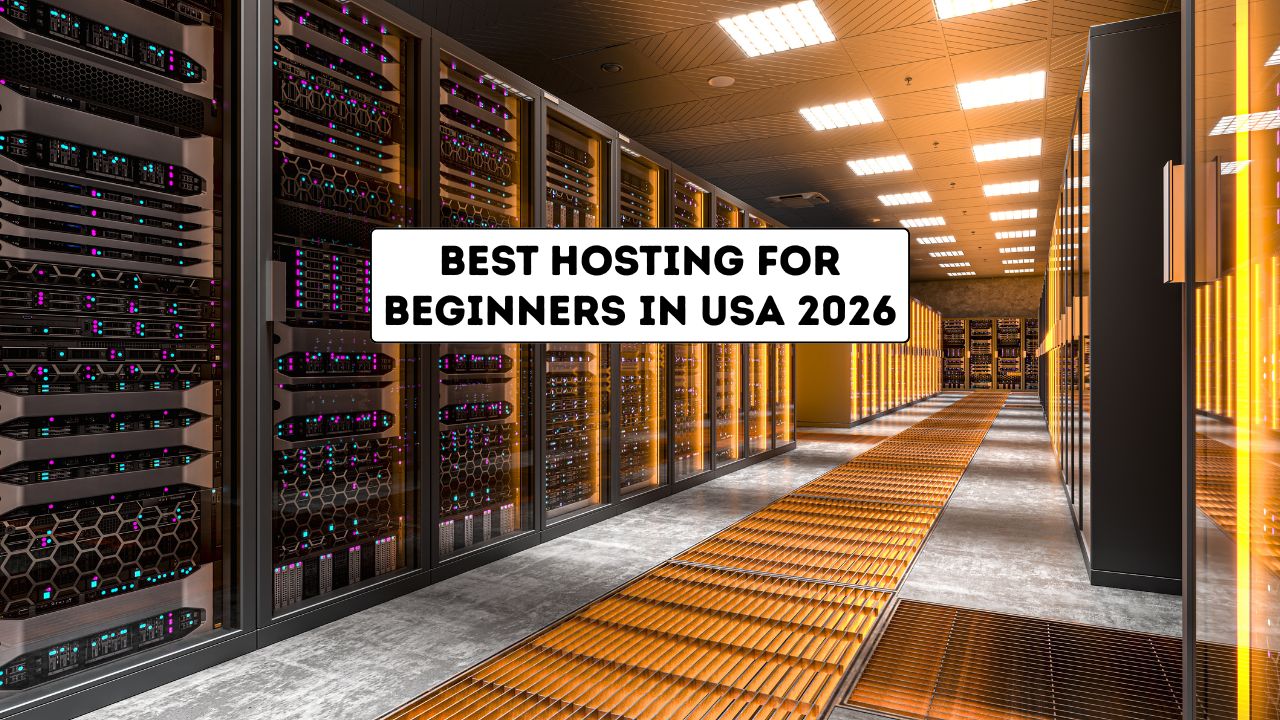
Best Web Hosting for Beginners in USA 2026 – Starting a website in 2026 feels exciting — until you hit the hosting page and suddenly you’re drowning in words like “cPanel,” “bandwidth,” “NVMe storage,” and “99.9% uptime guarantee.” Sound familiar? If you’ve been staring at hosting comparison pages for hours without making a decision, this guide is for you.
The best web hosting for beginners in USA isn’t just about the cheapest price tag or the flashiest ad you saw on YouTube. It’s about finding a platform that won’t make you want to throw your laptop out the window at 11pm when your site goes down and you have no idea why. I’ve spent years watching beginners make expensive mistakes with hosting — picking the wrong plan, getting locked into long contracts, or signing up with a host that sounds great but has support that takes 48 hours to reply.
Why Choosing the Right Web Host Actually Matters More Than Your Website Design
Here’s something most hosting guides skip entirely: your hosting provider affects almost everything about your website’s success — not just whether it’s “online” or not.
Google’s Core Web Vitals update made page load speed a direct ranking factor. That means a slow host doesn’t just frustrate your visitors — it tanks your search visibility. Studies consistently show that users abandon a page that takes more than 3 seconds to load. For beginners building their first blog, small business site, or online portfolio, a sluggish server can quietly kill your growth before it even starts.
Beyond speed, your hosting choice affects:
- Security: Shared hosting can expose you to “bad neighbor” risks if another site on your server gets hacked
- Email deliverability: Cheap hosts sometimes have IP reputations that send your emails straight to spam
- Customer support quality: When something breaks (and it will), the difference between 24/7 live chat and a ticket system with a 3-day wait is everything
Think about web hosting the same way you’d think about the foundation of a house. Nobody admires a foundation — but without the right one, everything built on top of it is fragile.
What Beginners Actually Need From a Hosting Provider in 2026
Before jumping into specific recommendations, let’s talk about what you actually need as someone just starting out. Not what hosting companies want to sell you — what you genuinely need.
One-click WordPress installation. If you’re building a blog, business site, or anything content-driven, WordPress powers about 43% of the entire internet. The ability to install it in seconds (instead of manually configuring databases) is non-negotiable for beginners.
A free domain name. Paying separately for a domain adds friction and cost. Most good beginner hosts include one free for the first year.
SSL certificate included. Without SSL, browsers label your site “Not Secure” — which terrifies visitors and hurts rankings. Every reputable host includes a free Let’s Encrypt SSL in 2026. If they don’t, walk away.
Genuine 24/7 support. Not just chat bots. Actual humans who can troubleshoot in real time. This matters enormously in the beginning when you don’t know what you don’t know.
An easy control panel. cPanel is the industry standard and it’s reasonably user-friendly. Some hosts have moved to proprietary dashboards that are even simpler. Either works, as long as it doesn’t require a computer science degree.
Here’s a question worth sitting with: What’s the purpose of your website? A personal blog has different needs than an e-commerce store. Your answer should guide every hosting decision you make.
The Best Web Hosting for Beginners in USA 2026 — Ranked and Reviewed
1. Bluehost — Still the Gold Standard for WordPress Beginners
Bluehost has been officially recommended by WordPress.org for years, and in 2026, that relationship is stronger than ever. Their onboarding experience is built specifically for people who have never touched a server in their life.
When you sign up, you’re walked through a guided setup wizard that helps you choose a theme, install WordPress, and launch your site — all before you’ve had time to finish your coffee. The interface is clean, and the learning curve is genuinely gentle.
Pricing starts at $2.95/month on the Basic plan (introductory rate). You get a free domain for the first year, free SSL, and 10 GB of SSD storage. That’s more than enough to launch and grow for the first year or two.
Where Bluehost truly shines is customer support. Their 24/7 live chat is consistently responsive, and their knowledge base is deep enough that most beginner questions are answered before you even need to contact someone.
One honest caveat: renewal rates jump significantly after your initial term. When you sign up at $2.95/month, expect to pay around $9-10/month when it renews. This isn’t unique to Bluehost — nearly every host does this — but it’s worth budgeting for.
2. Hostinger — The Best Value for Beginners on a Tight Budget
If budget is your primary concern, Hostinger is almost impossible to beat. At $2.49/month, their Premium plan includes 50 GB of NVMe storage (which is noticeably faster than standard SSD), a free domain, and their proprietary hPanel — which is honestly one of the cleanest hosting dashboards available.
Hostinger built its reputation by making professional hosting affordable for people in markets where $15/month is a significant commitment. That philosophy has translated into a genuinely excellent beginner experience. Their AI website builder, introduced in 2024 and refined through 2025, lets you describe your website in plain English and get a working draft in minutes.
One thing that sets Hostinger apart in 2026 is their approach to AI tools. They’ve baked in AI content suggestions, SEO recommendations, and automated performance optimizations — all things that used to require expensive plugins or technical know-how.
The support quality has improved dramatically compared to a few years ago. Live chat response times are typically under two minutes.
3. SiteGround — Best for Beginners Who Prioritize Speed and Support
SiteGround costs a little more than the first two options — starting at $3.99/month — but the premium is justified for specific reasons. Their server infrastructure is among the fastest available in the shared hosting space, and their customer support is genuinely exceptional.
SiteGround has won multiple industry awards for support quality, and unlike some hosts where “award-winning support” is marketing fluff, their team consistently delivers. Average chat response time is under 60 seconds, and their agents can actually solve problems rather than just reading from a script.
They also include their proprietary caching technology (SuperCacher) and free CDN integration — features that matter when Google is judging your site’s performance.
The downside? No free domain. You’ll need to purchase one separately (typically $12-15/year). For some beginners, that’s an easy trade-off for better performance and support. For others, the bundled domain is a dealbreaker.
4. DreamHost — A Solid, Privacy-First Alternative
DreamHost is one of the older independent web hosting companies in the US, and it shows in the right ways. They’ve been around since 1997, they’re one of the few non-private-equity-owned major hosts, and they have a genuine commitment to user privacy and open-source technology.
Starting at $2.59/month with a free domain included, DreamHost offers solid performance with 50 GB of SSD storage. Their custom control panel takes a little getting used to if you’re coming from cPanel, but it’s well-documented and the learning curve is manageable.
One underrated feature: DreamHost offers a 97-day money-back guarantee — the most generous in the industry. That’s more than three months to decide if it’s working for you.
Best Web Hosting for Beginners in USA 2026
| Host | Starting Price/mo | Free Domain | Storage | Best For | Beginner Score |
|---|---|---|---|---|---|
| Bluehost | $2.95 | Yes (1yr) | 10 GB SSD | WordPress | ★★★★★ 4.8 |
| Hostinger | $2.49 | Yes (1yr) | 50 GB NVMe | Budget-first | ★★★★★ 4.7 |
| SiteGround | $3.99 | No | 10 GB SSD | Speed & Support | ★★★★★ 4.6 |
| DreamHost | $2.59 | Yes | 50 GB SSD | Privacy focus | ★★★★☆ 4.4 |
| HostGator | $3.75 | Yes (1yr) | Unmetered | Scalability | ★★★★☆ 4.3 |
| GreenGeeks | $2.95 | Yes (1yr) | 50 GB SSD | Eco-conscious | ★★★★☆ 4.2 |
Prices reflect introductory rates. Renewal rates are higher — always check before buying.
Shared Hosting vs. Managed WordPress Hosting: Which One Should Beginners Pick?
This is a question that trips up a surprising number of beginners, so let’s clear it up simply.
Shared hosting means your website shares server resources with many other sites. It’s cheaper, flexible, and works for most personal projects, blogs, and small business sites that don’t receive thousands of visitors per day.
Managed WordPress hosting means the host handles all the technical WordPress stuff for you — updates, security patches, performance optimization. It’s more expensive, but it removes a significant layer of maintenance work.
For most beginners in 2026, shared hosting is the right starting point. Here’s why: managed WordPress hosting typically starts at $20-30/month, which is hard to justify when you’re just learning and building. Start on shared hosting, learn the fundamentals, and upgrade when your traffic genuinely demands it.
The one exception: if you’re launching a business site where downtime means lost revenue from day one, managed hosting is worth the investment.
Hidden Costs Beginners Overlook When Choosing a Web Host
Let’s talk about what the pricing page doesn’t show you. Every hosting guide lists introductory prices, but the real cost of web hosting includes things that catch beginners completely off guard.
- Domain renewal: Free domain for year one, then $15-20/year after
- SSL after the free period: Some hosts charge for SSL renewal after the first year
- Daily backups: Often listed as an add-on rather than included
- Email hosting: Some plans limit email accounts or charge separately
- Renewal rate vs. introductory rate: Always check the renewal price — it can be 2-3x higher
Here’s a practical tip that saves money: sign up for the longest available term (usually 36 months) at the introductory rate. You lock in the low price for three years instead of one. Just make sure you’re choosing a host you’re confident in before committing to three years.
Green Hosting in 2026 — Does It Actually Matter?
Sustainability has become a genuine consideration for website owners, especially small businesses that want their values to align with their tech choices. GreenGeeks, as the name suggests, offsets 300% of their energy consumption with renewable energy credits — meaning they put three times the energy they use back into the green grid.
If environmental responsibility matters to your brand or personal values, GreenGeeks is worth considering. Their performance is solid, their pricing is competitive at $2.95/month, and the 50 GB SSD storage is generous for beginners. The fact that you can say “my website runs on green energy” is a real differentiator for certain audiences.
This isn’t just feel-good marketing — as more consumers make purchasing decisions based on environmental impact, hosting choices can become part of your brand story.
How to Actually Set Up Your First Website in 2026 — A Realistic Timeline
People underestimate how fast you can go from zero to live website in 2026. Here’s what a realistic timeline looks like:
Day 1 (about 2-3 hours total): Choose your hosting plan, sign up, register your domain, install WordPress via one-click installer, choose a free theme from the WordPress theme directory, and customize your site name and tagline. You now have a live website.
Week 1: Write your first few pages (About, Contact, Home), install essential plugins (Yoast SEO or Rank Math for search optimization, a security plugin, a caching plugin), and connect Google Analytics.
Week 2-4: Publish your first blog posts or product pages, start building internal links between content, and submit your sitemap to Google Search Console.
The point is this: getting started is dramatically easier than people think. The hardest part isn’t the technical setup — it’s overcoming the feeling that you need to know everything before you begin. You don’t.
FAQ: Best Web Hosting for Beginners in USA 2026
u003cstrongu003eQ : What is the best web hosting for absolute beginners in the USA?u003c/strongu003e
u003cstrongu003eAns : u003c/strongu003eBluehost is widely considered the best starting point for true beginners because of its guided WordPress setup, 24/7 live support, and official WordPress.org recommendation. Hostinger is the better pick if budget is the top priority.
u003cstrongu003eQ : How much does beginner web hosting cost in 2026?u003c/strongu003e
u003cstrongu003eAns : u003c/strongu003eIntroductory pricing starts as low as $2.49/month (Hostinger) and ranges up to around $4-5/month for premium shared hosting options. Remember that renewal rates are higher — typically $8-12/month after the initial term.
u003cstrongu003eQ : Is free web hosting a good idea for beginners?u003c/strongu003e
u003cstrongu003eAns : u003c/strongu003eNo. Free hosting comes with severe limitations — ads displayed on your site, no custom domain, poor performance, and virtually no support. The difference between free hosting and paid hosting at $2.49/month is dramatic. Always start with a paid plan.
u003cstrongu003eQ : Do I need technical skills to start a website in 2026?u003c/strongu003e
u003cstrongu003eAns : u003c/strongu003eNot at all. Modern hosting platforms and WordPress have made it possible to build a professional-looking website with zero coding knowledge. If you can use a word processor, you can build a website.
u003cstrongu003eQ : What’s the difference between a domain name and web hosting?u003c/strongu003e
u003cstrongu003eAns : u003c/strongu003eYour domain name is your website’s address (like yoursite.com). Web hosting is the server where your website’s files actually live. You need both — many beginner hosting plans include a free domain for the first year, which simplifies the process.
Best Web Hosting for Beginners in USA 2026 Final Thoughts — Just Start
Here’s the truth that most hosting guides dance around: analysis paralysis kills more websites than bad hosting ever will. The best web hosting for beginners in USA in 2026 is the one you actually sign up for and start building on.
If you want the safest, most beginner-friendly choice: Bluehost. If budget is everything: Hostinger. If you want the best support experience and can pay slightly more: SiteGround.
All three are genuinely excellent. All three will support your growth from first blog post to thousands of monthly visitors. The difference between them is far less important than the decision to start.
So — which type of website are you planning to build? Drop it in the comments. Whether it’s a personal blog, local business site, or online store, there might be specific recommendations worth sharing for your situation. I read every comment and respond to as many as I can.
Your website is waiting to exist. The only thing between you and that is a decision.