

 Trending
  VISIT THIS SITE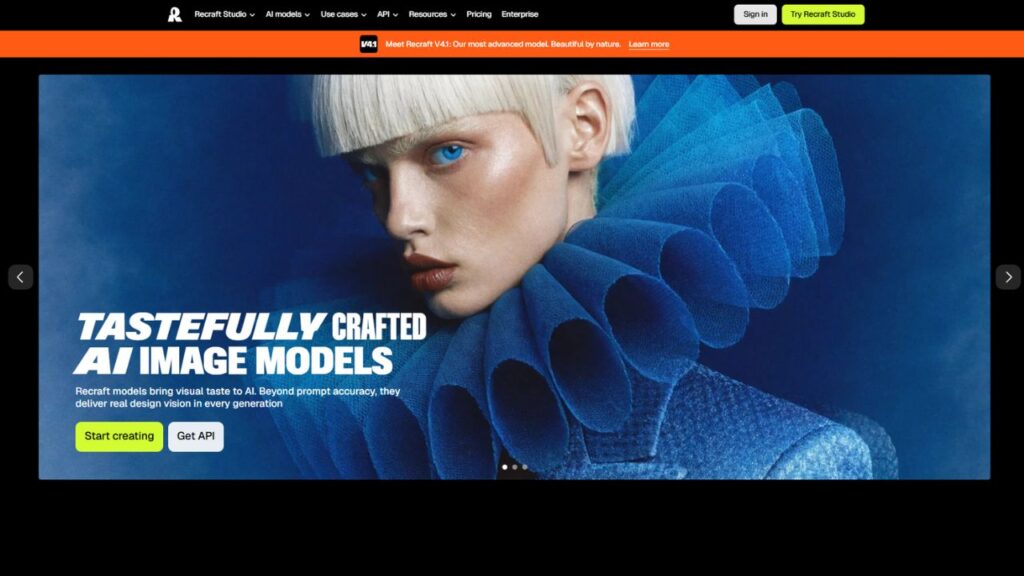
 ChatGPT
 Perplexity
 Claude AI

 Official Website
  Affiliate Program Link
 Recraft AI Review: Is This the Best AI Image Generator for Designers
I spent the last three weeks putting Recraft AI through real design work — pitch decks, social graphics, vector illustrations, and a few product mockups. Most AI image tools impress me for about ten minutes, then fall apart when I try to control brand colors or export a clean SVG. Recraft did something different. It felt like a tool built by someone who has actually shipped design files to a client, not just played around with prompts. Here’s my honest take after using it daily.
Quick Facts
- Developer/Company: Recraft, Inc.
- Founded: 2022
- Category: AI image generation and design
- Free Plan: Yes
- Starting Price: $10/month (Pro plan)
- Best For: Designers, marketers, founders, and content teams who need brand-consistent visuals
- Platforms: Web, iOS, Android
- gyanshout.com Rating: 4.4/5
What Is Recraft AI? (And Who Actually Needs It)
Recraft AI is an AI image generator built for people who care about visual consistency, not just pretty pictures. While tools like Midjourney chase photorealistic art and DALL-E focuses on broad accessibility, Recraft zeroes in on the designer’s actual workflow — vector output, brand color control, style locking, and editable layers.
You don’t need to be a designer to use it. But if you’ve ever generated an AI image, loved it, then realized you couldn’t change the colors without re-prompting for an hour, you’ll get why Recraft exists.
The platform launched publicly in late 2022, founded by Anna Veronika Dorogush — the same engineer behind CatBoost at Yandex. That background shows up in how the tool handles style references and brand identity: it treats visual consistency as a first-class problem, not an afterthought. According to the company’s official site, Recraft has since grown to serve millions of users, and its V3 model ranked at the top of the Artificial Analysis image generation leaderboard for several months in 2024 (recraft.ai).
So who actually needs it? If you’re a solo founder making pitch decks, a social media manager pumping out daily posts, or a designer prototyping UI illustrations — Recraft solves the one thing most AI image tools ignore: making everything match.
Have you tried generating a set of visuals where every image actually looked like part of the same campaign? Most tools fail this test. Tell me about your experience in the comments.
Key Features of Recraft AI — What Makes It Stand Out
Recraft packs more design-oriented features than any other AI image generator I’ve tested. Here’s what actually matters when you sit down to use it.
Vector and SVG Export
This is the headline feature and the reason designers pay attention. Recraft generates true vectors, not just raster images pretending to be scalable. You can export SVGs and open them directly in Figma, Illustrator, or any vector editor.
Why it matters: most AI art tools give you a PNG and call it a day. With Recraft, you get shapes you can recolor, resize, and edit. I made a logo concept in about four minutes, exported the SVG, and dropped it into Figma without cleanup.
Brand Color Locking
You can set your exact brand palette — hex codes and all — and Recraft will keep every generation inside that palette. The tool doesn’t just hint at colors; it enforces them.
Why it matters: any marketer knows the pain of generating 20 hero images and only 3 matching your brand guide. Recraft solves this directly. You upload your palette once, and every output respects it.
Style Consistency Across Generations
Recraft lets you lock a visual style — say, “flat illustration, soft shadows, modern” — and apply it across hundreds of generations. The tool remembers the style reference and reuses it.
Why it matters: this is what makes Recraft feel less like a toy and more like a production tool. You build a style once, then scale it across blog headers, social posts, and ad creatives without drift.
Inpainting and Image Editing
Recraft has a built-in editor where you can select parts of an image and regenerate just that region. You can also remove objects, swap elements, or extend backgrounds.
Why it matters: instead of starting over when one detail looks wrong, you fix it in place. The eraser and region-select tools feel snappy and don’t require Photoshop-level expertise.
Text-to-Image and Image-to-Image
Like most modern AI image generators, Recraft accepts text prompts and reference images. You can upload a sketch or a mood board and ask the tool to riff on it.
Why it matters: the image-to-image mode surprised me. I uploaded a rough wireframe of a product mockup, and Recraft generated a polished version that kept the original layout. Useful for client presentations.
Mockup Generation
There’s a specific tool inside Recraft for placing designs onto t-shirts, mugs, phone screens, and packaging. You upload your graphic, pick the mockup, and the tool handles the perspective and lighting.
Why it matters: for e-commerce and merch sellers, this replaces expensive Photoshop mockups. It takes about 20 seconds instead of 20 minutes.
Recraft V3 Model
The current flagship model handles long prompts, complex compositions, and small text inside images better than most competitors. Recraft V3 also handles typography far more accurately — it can render legible words inside images, which is something most AI tools still mess up.
Why it matters: legible text in AI images is a recurring nightmare. If you need signage, posters, or social graphics with readable copy, Recraft V3 handles it better than the alternatives I tested.
Recraft AI Pricing Plans — What You Actually Get for Your Money
Recraft’s pricing has shifted a few times, so I’ll give you the structure and tell you to check the official page for current numbers. As of late 2024, the breakdown looked roughly like this:
- Free Plan: Yes. You get a small daily credit allowance (around 50 generations per day at last check). You can use most core features, including vector export. The catch: generations are slower during peak hours, and you don’t get commercial licensing on the free tier in some regions.
- Pro Plan: $10/month billed annually, or around $12/month billed monthly. This unlocks faster generation, more credits, commercial usage rights, and priority access to new features. For most freelancers and creators, this is the sweet spot.
- Business Plan: Custom pricing. Built for teams. Includes collaboration features, brand kit management, API access, and dedicated support. Pricing scales with seats and usage.
I ran the numbers for my own workflow — about 200 image generations a month — and the Pro plan covered it comfortably. The free tier works for casual users, but you’ll burn through credits fast if you’re producing daily content.
If you’re managing a team, the Business plan adds real value. You can share brand kits, lock style guides across members, and keep everyone generating in the same visual language. That’s something no other AI image generator offers at this price.
You can check the latest pricing directly on recraft.ai/pricing.
Which feature surprised you the most when you first tried Recraft? Drop a comment below.
How Does Recraft AI Compare to Alternatives?
Picking an AI image generator depends on what you’re actually doing. Here’s how Recraft stacks up against the tools most people compare it to.
| Tool Name | Best For | Starting Price | Free Plan | Overall Rating |
|---|---|---|---|---|
| Recraft AI | Designers needing brand-consistent vector graphics | $10/month | Yes | 4.4/5 |
| Midjourney | Photorealistic art and creative exploration | $10/month | No | 4.6/5 |
| DALL-E 3 (via ChatGPT) | Quick, conversational image generation | $20/month (ChatGPT Plus) | No | 4.3/5 |
| Adobe Firefly | Commercial-safe images inside Creative Cloud | $4.99/month | Yes (limited) | 4.2/5 |
| Ideogram | Text-heavy designs and typography | $7/month | Yes | 4.1/5 |
Recraft wins for design-system-driven work. Midjourney wins for artistic exploration. DALL-E 3 wins for casual convenience. Firefly wins for commercial indemnification. Ideogram wins when text accuracy is the whole point.
For a designer or marketer producing branded visuals, Recraft AI is the most practical choice. For a concept artist chasing pure image quality, look elsewhere.
Real-World Use Cases — Who Gets the Most Value?
Let me walk through how different people actually use Recraft day-to-day.
Freelance Graphic Designers
A designer I work with used Recraft to produce a full pitch deck for a coffee brand. She generated 40 hero images, all matching the client’s exact palette, plus 12 logo variations and 6 product mockups. The whole thing took her two hours. Before Recraft, that same work would have been three days of Photoshop.
Solo Founders and Indie Hackers
If you’re bootstrapping a startup and can’t afford a design agency, Recraft fills the gap. You can generate landing page hero images, blog graphics, social media posts, and investor deck visuals — all in your brand style — without hiring anyone.
Content Marketing Teams
Marketing teams producing weekly blog content know the bottleneck: finding or creating visuals that don’t look generic. Recraft lets you generate custom graphics in minutes, and the style-locking feature means your blog looks consistent across dozens of posts. One content lead told me it cut their image production time by about 70%.
E-commerce Sellers
If you sell on Shopify, Etsy, or Amazon, Recraft’s mockup tool alone justifies the subscription. You generate product imagery, mock it on apparel or packaging, and ship it. No Photoshop, no expensive photoshoots.
Educators and Course Creators
Online course creators need slide visuals, thumbnail art, and module graphics. Recraft’s text-to-image accuracy and clean style options make it a strong fit. One YouTuber I know used it to generate 50 thumbnail variations in an afternoon.
The common thread: anyone producing multiple related visuals gets outsized value from Recraft. If you only need one-off images, the free tier works fine.
My Honest Verdict — Should You Use Recraft AI?
After three weeks of daily use, here’s where I land.
Recraft AI earns a 4.4 out of 5 from me. It solved a real problem in my workflow — generating brand-consistent visuals at speed — and did so without the usual AI-image-tool friction. The vector export alone puts it ahead of every major competitor for design work. The brand color locking and style consistency features are genuinely useful, not marketing fluff.
That said, it’s not perfect. If you need photorealistic art for a film concept or a fine-art print, Midjourney still wins. If you just want to type a prompt and get a pretty picture without thinking about systems, DALL-E 3 inside ChatGPT feels easier. Recraft rewards users who think like designers — people who care about grids, palettes, and consistency.
Who should use it: designers, marketers, founders, content teams, and e-commerce sellers who produce branded visuals regularly.
Who should skip it: hobbyists looking for one-off artistic images, photographers needing photorealism, and anyone who doesn’t care about brand consistency.
Start with the free tier. Generate a few images in your brand palette and see if the style-locking feature does what I described. If it does — and I think it will — upgrade to Pro within a week. Ten dollars a month for this kind of output is a steal.
Recraft AI FAQ
Q : Is Recraft AI free to use?
Ans : Yes. Recraft offers a free tier with daily credits. You can generate images, test vector export, and try most core features. For commercial use and higher volume, the Pro plan starts at $10/month.
Q : Is Recraft AI safe to use?
Ans : Yes. Recraft runs on standard web infrastructure with encrypted connections. For commercial safety, the company offers indemnification on paid plans, similar to Adobe Firefly. Always review their current content policy before commercial use.
Q : What is Recraft AI best for?
Ans : Recraft is best for brand-consistent design work — vector graphics, social media visuals, mockups, and campaign assets where style and color accuracy matter more than photorealism.
Q : Recraft AI vs Midjourney — which is better?
Ans : It depends on your goal. Recraft wins for design systems, vector output, and brand consistency. Midjourney wins for artistic quality and photorealism. Designers usually prefer Recraft; concept artists usually prefer Midjourney.
Q : Can I use Recraft AI images commercially?
Ans : Yes, on paid plans. The free tier has some commercial restrictions depending on your region. Pro and Business plans include full commercial licensing.
Q : Does Recraft AI work on mobile?
Ans : Yes. There are iOS and Android apps, plus a full-featured web version. The mobile apps cover most generation features but lack some advanced editing tools available on desktop.
Q : How does Recraft AI handle text in images?
Ans : Better than most competitors. Recraft V3 can render legible text inside images — useful for posters, signage, and social graphics. It’s not perfect, but it outperforms Midjourney and DALL-E 3 on this specific task.